.png&w=128&q=75&dpl=dpl_wWAtKykWFMSkT2C7tzG8xdh5PNL3)
.png&w=96&q=75&dpl=dpl_wWAtKykWFMSkT2C7tzG8xdh5PNL3)
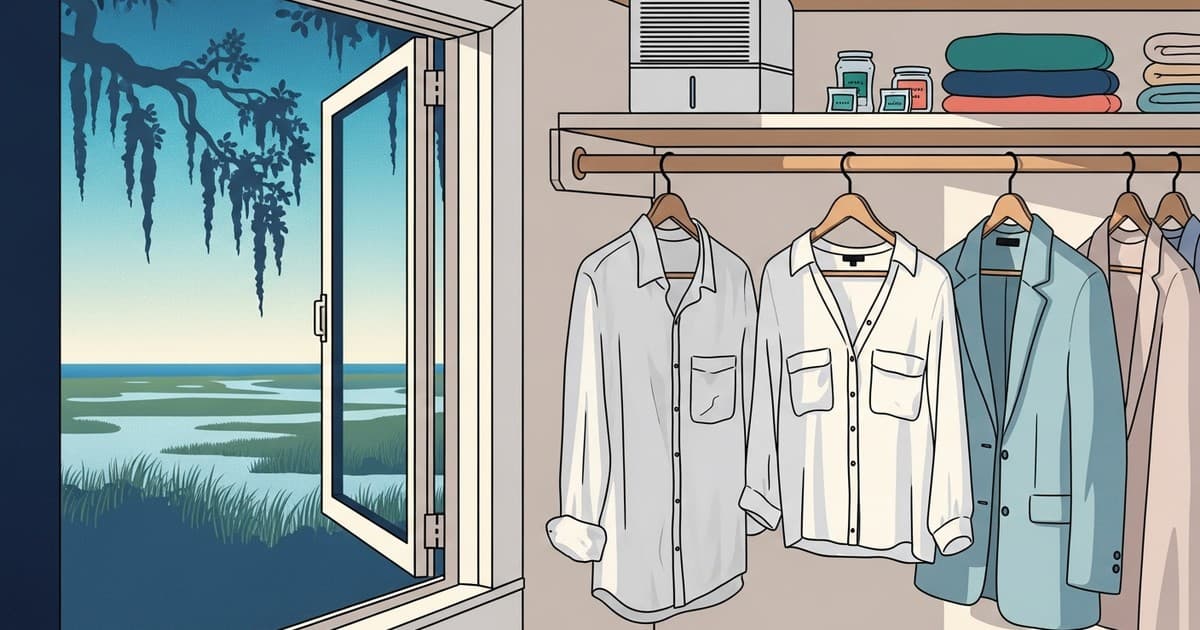
Savannah's position at the edge of the Georgia Lowcountry gives it much of its magic — the draping Spanish moss, the lush squares, the breezes rolling in off the Savannah River and Wassaw Sound. It also gives it some of the most persistent fabric-damaging humidity on the East Coast. If you live in Ardsley Park, Isle of Hope, Thunderbolt, or anywhere across coastal Georgia, you already know that the air here never quite dries out. What you may not realize is how consistently that moisture is working against the clothes hanging in your closet.
At Best Cleaners & Laundry, we have been protecting Savannah wardrobes since 1910. Over more than a century in this coastal climate, we have developed a clear picture of how moisture damage unfolds — and how to stop it before it ruins garments you love. This guide is built specifically for Lowcountry residents who want practical, proven savannah clothing care strategies tailored to where we actually live.
How Coastal Georgia's Climate Creates Ideal Conditions for Fabric Damage
What makes coastal Georgia different from other humid regions is the layered nature of our moisture. It is not just the summer heat — it is the combination of salt air from the barrier islands, tidal influence from the marshes, warm overnight temperatures that prevent fabrics from fully drying, and a rainy season that stretches from May through September. Relative humidity in the Savannah area routinely tops 80 percent, and in neighborhoods like Isle of Hope and Thunderbolt, where homes sit closer to the water, the ambient moisture is even more consistent.
Fabric is naturally hygroscopic — it absorbs and releases water vapor continuously in response to the air around it. In a balanced climate, this cycle is harmless. In coastal Georgia, it means your clothes are absorbing and releasing moisture around the clock, with more absorption than release during most of the year. That constant cycling is the first step in a chain of damage that includes fiber breakdown, color fading, weakened seams, and the growth of mold and mildew.
The challenge for Savannah residents is that this damage is slow and cumulative. You do not wake up one morning to find a ruined wardrobe. Instead, you notice over time that a blouse seems a little dull, a favorite blazer has developed an odd smell, or your linen pants look somehow less crisp than they did two summers ago. By the time damage is visible, it has usually been building for months.
Identifying Early Signs of Moisture Damage in Your Wardrobe
Recognizing humidity fabric care problems early is the difference between a simple professional clean and a garment that cannot be saved. Here is what to look for when you open your closet.
A musty or earthy odor is almost always the first sign of moisture-related trouble. This smell does not mean your clothes are dirty — it means mildew spores have found enough moisture and organic material to begin colonizing the fibers. Do not assume the smell will air out on its own. It typically deepens over time unless the source is addressed professionally.
Faint grayish or white patches on dark fabrics are early-stage mildew. On light fabrics, mildew may appear as light tan or yellowish spotting that you might initially mistake for a stain. Either way, the appropriate response is to isolate the garment — keeping it away from other clothes in your closet — and bring it to us for assessment.
Discoloration along fold lines is a sign that moisture has been sitting in compressed fabric over time. White and pastel garments are especially prone to this: the body oils and residues that remain in fabric after washing oxidize in humid conditions, leaving faint brownish or yellow marks. This type of staining often responds well to professional treatment, but it becomes progressively more difficult to remove the longer it sits.
Stiffness or a rough texture in garments that were once supple can indicate that minerals from moisture have bonded with fibers, or that mildew has begun degrading the fabric structure itself. Silk and lightweight wool are particularly susceptible to texture changes from sustained humidity exposure.
For specific help with visible staining, our complete stain removal guide covers the most common issues Savannah residents face throughout the year.
Savannah Clothing Care: Practical Prevention That Works in This Climate
Moisture damage prevention is not complicated, but it does require consistent habits. These are the strategies our team recommends to customers across coastal Georgia.
Start with Clean Garments Every Time
The single most effective thing you can do is ensure that nothing enters your closet with residue on it. Body oils, food, sweat, and even trace amounts of lotion give mildew spores exactly what they need to germinate. Garments that have been worn — even lightly — should be cleaned before they go back into storage. For anything labeled dry-clean only, that means professional cleaning. For everyday items, a thorough wash followed by complete drying (not just damp-dry) is essential.
Residents of Ardsley Park with larger homes and more formal wardrobes should pay particular attention to seasonal pieces: the silk blouse worn twice a year, the wool blazer for cooler months, the tablecloths from the last dinner party. These are the items most likely to be stored with trace residue and most likely to suffer for it. Our seasonal clothing storage guide walks through the complete process.
Choose Breathable Storage Materials
One of the most common moisture damage mistakes we see is storing garments in plastic bags or sealed airtight containers. Plastic traps humidity and prevents the natural air circulation that keeps fabric stable. The polybag your dry cleaning comes back in is designed for short-term transport, not storage — we always recommend removing it once you are home.
Cotton muslin garment bags are the gold standard for natural-fiber clothing. They protect against dust and light while allowing air to move through the fabric. For folded items in drawers or bins, acid-free tissue paper between layers helps manage moisture and prevents color transfer. Canvas storage boxes outperform plastic tubs for nearly every textile.
Control the Environment in Your Storage Spaces
In coastal Georgia, closet environment management is as important as what you do with the clothes themselves. A few targeted investments make a measurable difference:
- Silica gel moisture absorbers placed on closet shelves reduce ambient humidity without chemicals. Replace them every three to four months or when they become saturated.
- Small dehumidifying crystals in drawers and bins actively pull moisture from the air in enclosed spaces.
- A cedar block or cedar ring on closet rods provides light moisture absorption and natural pest deterrence for wool and cashmere — helpful throughout the year in this climate.
- Periodic ventilation of closets by opening doors during air-conditioned hours lets cooler, drier air circulate and displace the warmer, moister air that tends to collect in enclosed spaces.
For residents in Thunderbolt and along the waterfront, where salt air adds an additional layer of complexity, it is worth running a whole-home dehumidifier during peak humidity months rather than relying solely on air conditioning.
Why Professional Dry Cleaning Is Your Best Defense in Humid Climates
No amount of smart storage eliminates the need for professional cleaning when you are living in a climate like ours. Professional dry cleaning does things that home laundering simply cannot accomplish with humidity-damaged or humidity-vulnerable garments.
Professional solvents penetrate deep into fiber structures to remove the embedded oils, residues, and early mildew that standard washing leaves behind. These residues are invisible to the eye but are exactly what moisture-driven deterioration feeds on. A professional clean before long-term storage effectively resets the risk clock for your most valuable garments.
Delicate fabrics require professional care regardless of visible damage. Silk, structured wool, and heavily embellished pieces cannot be safely washed at home even when the issue is something as simple as a musty smell. Attempting home treatment on these garments — even with gentle detergents — can cause irreversible shrinkage, color loss, or structural damage. Our services overview details the full range of fabrics and garment types we handle.
Eco-friendly cleaning methods matter in a community that cares about the coastal ecosystem. At Best Cleaners, we use environmentally responsible cleaning solutions that are effective on humidity-affected fabrics without harsh chemical residues. This approach is better for your garments and better for the Savannah environment we all share.
Our team at both locations — Waters Ave serving the Eastside and Abercorn St serving the Southside — includes experienced professionals who have seen every form of coastal humidity damage and know how to address it. Whether you are dealing with early mildew, persistent odor, or discoloration that has been building for seasons, we can assess the damage and give you an honest recommendation. We offer free estimates on all garment assessments — no charge to find out what we are working with.
Eco-Friendly Savannah Clothing Care: What to Look For
Many Savannah residents have shifted toward more sustainable household choices, and garment care is no exception. If you are choosing cleaning products for home laundering or selecting a dry cleaner, here is what to look for in a humid-climate context.
Plant-based detergents handle moderate moisture-related odors well and are gentler on the natural fibers most prone to humidity damage. For cotton and linen items with a mild musty smell, a warm-water wash with a plant-based detergent — followed by complete drying in direct airflow — is often sufficient.
Avoid fabric softeners on moisture-prone items. Fabric softener leaves a waxy residue on fibers that reduces breathability and actually encourages moisture retention. This is counterproductive in a humid climate where you want fabrics to dry as completely as possible.
Choose a cleaner who is transparent about their process. At Best Cleaners, we have always been willing to explain exactly what we do and why — we are a family business, and that kind of transparency has been at the heart of how we operate since 1910. If you have questions about our cleaning methods or eco-friendly options, call us or stop by.
Key Takeaways
- Coastal Georgia's layered humidity — salt air, marsh moisture, warm nights — creates sustained fabric stress that goes beyond what standard home care can address.
- Musty odor is the first warning sign of moisture-driven mildew; act on it before visible growth develops.
- Always clean before storing — residue left on garments accelerates moisture damage in enclosed spaces.
- Breathable storage materials (cotton garment bags, acid-free tissue, cedar) outperform plastic for humid-climate storage.
- Professional dry cleaning penetrates what home laundering misses and is essential for delicate fabrics and humidity-damaged garments.
- Eco-friendly cleaning and moisture-aware habits protect both your wardrobe and Savannah's coastal environment.
Protect Your Wardrobe with a Partner Who Knows This Climate
Savannah's beauty and its humidity are inseparable. But protecting your wardrobe from moisture damage is entirely achievable with the right habits and the right professional care behind you. Best Cleaners & Laundry has been that partner for Savannah families for more than 110 years — through every summer, every rainy season, and every wardrobe emergency in between.
We offer same-day service for most garments, free estimates on any damage assessment, and the kind of personal attention you get from a family business that has spent a century building trust in this community.
Visit us at 1002 Waters Ave on the Eastside or stop by our Southside location at 11434 Abercorn St. Walk-ins are always welcome, and we are happy to take a look at any garments you are concerned about.
Call us at (912) 232-1171 — we are glad to help.
Questions about moisture damage or savannah clothing care? Reach Best Cleaners & Laundry at (912) 232-1171 or visit 1002 Waters Ave (Eastside) or 11434 Abercorn St (Southside).