.png&w=128&q=75&dpl=dpl_GF6ZcgetNQLmmmjGzUuYC3a4x42x)
.png&w=96&q=75&dpl=dpl_GF6ZcgetNQLmmmjGzUuYC3a4x42x)
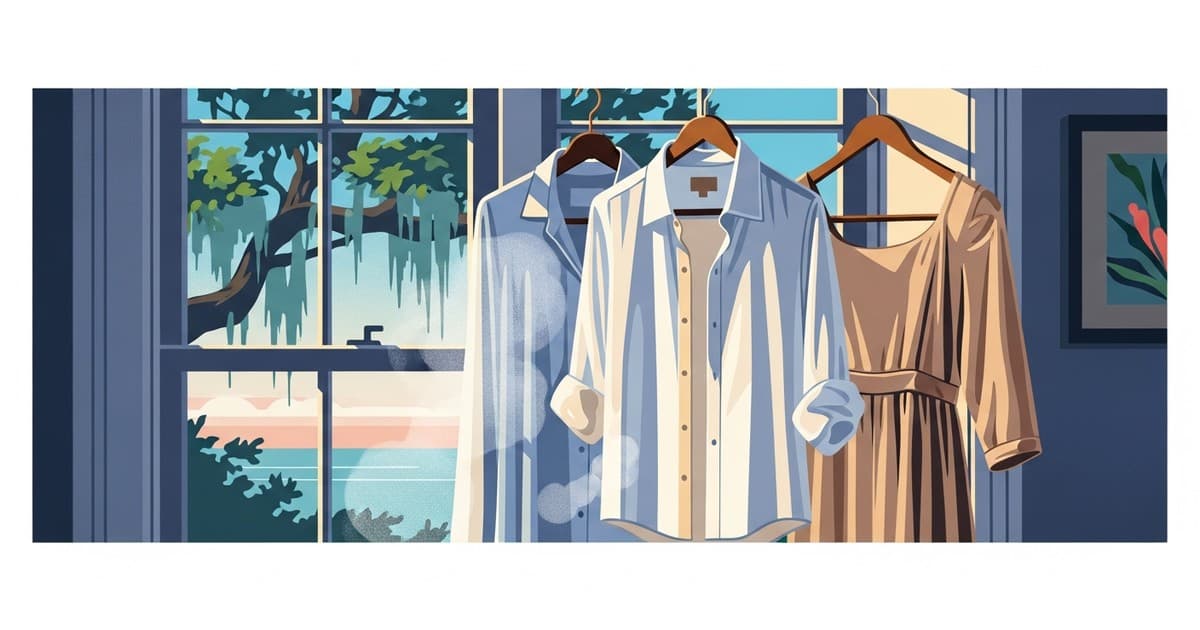
By the last week of May, Savannah has already shown its hand. Mornings start sticky, afternoons bring that thick coastal air rolling in off the marsh, and any linen jacket that looked crisp at breakfast has gone soft and wrinkled by the time you reach River Street. That's the Lowcountry tradeoff — linen is the right fabric for our climate, but it asks for more careful garment care than almost anything else in your closet. With the right approach to dry cleaning in Savannah, your spring wardrobe can keep its shape all the way into summer.
At Best Cleaners & Laundry, we've been pressing linen for Savannah families since 1910, long enough to know exactly how this fabric behaves between Forsyth Park and Tybee Island. Here's what changes in late May, and how professional pressing keeps your warm-weather pieces looking the way the designer intended.
Why Late-May Humidity Is Tough on Linen
Linen is woven from flax fibers, which means it's hollow, breathable, and naturally moisture-wicking — the same qualities that make it perfect for a Savannah May also make it react to every shift in the air. When relative humidity climbs into the 70s and 80s, linen fibers absorb that moisture, swell slightly, and lose the crisp structure a good press gave them.
You'll see it most on collars, cuffs, and the back of a jacket where it touches your seat. Wrinkles deepen, hems start to roll, and lighter colors begin to look tired even when they're clean. The fabric isn't damaged — it's just doing exactly what flax does in humid air.
The fix isn't to retire your linen until October. It's to clean and press it correctly so it bounces back between wears. Our humid-climate garment care guide walks through the bigger picture, but linen deserves its own playbook.
What Professional Pressing Actually Does to Linen
Home ironing and professional pressing are not the same process. A home iron applies dry heat from a single direction and relies on you to keep moving. Our commercial presses use a precise mix of calibrated steam, even heat, and controlled pressure — the steam relaxes the flax fibers, the press sets the shape, and the cooling stage locks it in.
That last stage matters more than people realize. When a freshly pressed garment cools under pressure, the fibers hold their new alignment far longer than they would after a quick pass with a household iron. In Savannah's humidity, that's the difference between linen that holds up through a wedding reception and linen that's wilting before the toast.
Pressing also lets us address areas a home iron can't reach cleanly — the inside of a lapel, the yoke of a shirt, the pleat detail on a linen dress. For anything you actually care about, the difference is visible across the room.
The Garments That Benefit Most This Time of Year
Late spring in Savannah brings out a specific rotation, and each piece in it responds well to professional finishing. A few favorites we see often at both shops:
- Linen blazers and sport coats — structure is everything here, and home ironing usually flattens the canvas inside the chest. Professional pressing preserves the shape.
- Linen shirts and blouses — collar points stay sharp, plackets lie flat, and underarms keep their crisp finish even on the second or third wear.
- Linen dresses and skirts — pleats and hems get their proper memory back, and lined pieces no longer puff out where steam settled unevenly.
- Linen pants and shorts — a clean center crease (when the cut calls for one) makes the whole outfit read more polished.
We also handle linen blends — linen-cotton, linen-rayon, linen-silk — each of which has its own pressing temperature. Sending mixed fabrics to our team means each piece gets the setting it was designed for instead of a one-size-fits-all home iron.
A Note on Wedding Season Linen
Late May rolls right into peak wedding weeks across the Historic District and out to Wormsloe and the islands. Groomsmen in linen suits, mothers of the bride in linen-blend separates, and rehearsal-dinner guests in lightweight dresses all face the same humidity challenge. We schedule pressing close to the event date so the finish is fresh when the photos start.
How to Get the Most Out of Each Press
A few habits help your linen stay sharp between visits. None of these require any extra work on your part beyond being mindful of how you store and handle the fabric.
First, don't crowd your closet. Linen needs air. When pieces are packed tight, the humidity in the closet stays in the fibers, and yesterday's wrinkles set into today's. Leave a finger's width between hangers and you'll feel the difference within a week.
Second, hang linen on shaped wooden or padded hangers, not thin wire. The shoulder line is where pressing pays off most, and a flimsy hanger undoes that work overnight.
Third, don't fold freshly pressed linen for more than a day or two. If you're traveling, hang it in the bathroom while you shower — the brief steam will release any travel creases without overworking the fabric.
And finally, bring linen in for cleaning before you store it for the season. Body oils, sunscreen, and salt air all bind to flax fibers in ways that aren't always visible. Cleaning before storage prevents yellowing later. We cover the storage side of this in our winter clothes storage guide, and the same principle applies in reverse when you put spring pieces away in the fall.
Why Locals Lean on Best Cleaners for Linen Season
We've been on the same corners — Waters Ave in the historic eastside and Abercorn St down in Southside — long enough to know our regulars' wardrobes. That continuity matters with linen. A piece we've pressed before goes back on the press with notes about its weight, weave, and any quirks the fabric has. That's a small detail, but it's why the finish stays consistent visit after visit.
Our team also handles the full range of fabrics you'll wear alongside linen in late spring — cotton, seersucker, silk, lightweight wool — through our dry cleaning and laundry-and-press service. One drop-off, every piece finished correctly.
If you've never used same-day service before, late May is a good week to try it. Drop garments in by 9 a.m. at either shop and they're ready by 5 p.m. the same afternoon — useful when an event sneaks up on the calendar.
Key Takeaways
- Linen absorbs Savannah's late-May humidity and loses its crisp shape — this is normal, not damage.
- Professional pressing uses calibrated steam, heat, and pressure that home irons can't replicate.
- Blazers, dresses, blends, and any piece with structure benefit most from a professional press.
- Air your closet, use shaped hangers, and clean linen before storage to extend each press.
- Best Cleaners' 115 years of garment care in Savannah means consistent results visit after visit.
Stop By for Linen Care That Holds Up to Savannah's Climate
Bring your spring wardrobe in before humidity peaks and we'll have it pressed and ready for whatever May and June throw at it. Visit us at 1002 Waters Ave, Savannah GA 31404 or 11434 Abercorn St STE B, Savannah GA 31419, or call (912) 232-1171 to ask about specific pieces. We're happy to walk through what we'd recommend before you drop anything off.
Best Cleaners & Laundry — Savannah's family-owned dry cleaner since 1910. Two locations serving the Historic District, Ardsley Park, Midtown, Southside, and the islands.