.png&w=128&q=75&dpl=dpl_wWAtKykWFMSkT2C7tzG8xdh5PNL3)
.png&w=96&q=75&dpl=dpl_wWAtKykWFMSkT2C7tzG8xdh5PNL3)
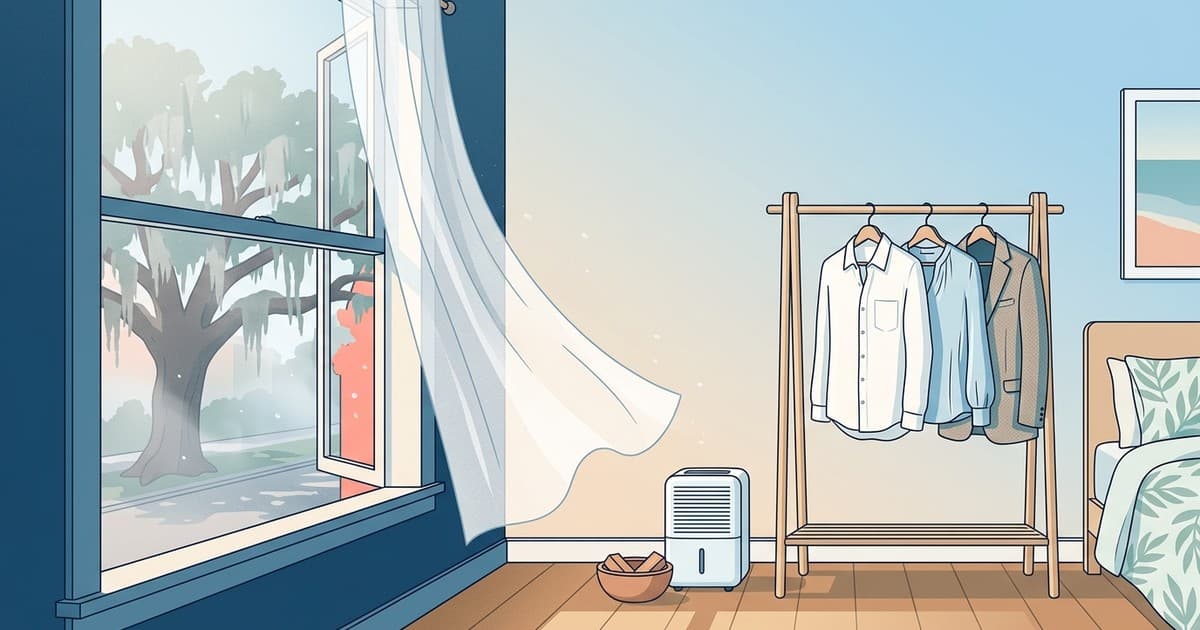
Every Savannah closet tells the same story eventually. A favorite white shirt turns dingy at the collar. A silk dress that was spotless in May comes out in October with a faint yellow shadow under each arm. A wool blazer smells like a damp basement even though it has never been near one. None of this is bad luck, and none of it is poor housekeeping. It is what happens when natural fibers live year-round in air that holds as much water as ours does.
Our family has been handling garment care in Savannah's humidity since 1910, long before air conditioning reached most homes along Waters Avenue. In that time we have watched the same damage repeat across generations of customers from the Historic District to Richmond Hill. This post explains exactly what humid air does to fabric, why the damage tends to show up in early fall, and how professional cleaning interrupts the process before a garment is lost for good.
What Savannah's Humidity Actually Does to Fabric
Humidity is not just uncomfortable. It is a constant supply of water that fibers absorb whether you want them to or not. Cotton, linen, silk, and wool are all hygroscopic, which means they pull moisture directly from the air and hold it. On a typical Savannah summer morning with a dew point in the mid-seventies, a cotton shirt hanging in an unconditioned closet can take on several percent of its weight in water before you ever put it on.
That moisture is the engine behind every kind of humidity damage. Water lets body salts and skin oils migrate deeper into the weave. Water gives mildew spores the conditions they need to grow. Water keeps odor-causing bacteria alive long after a garment should have dried. Even water alone, cycling in and out of the fiber day after day, slowly weakens the material and fades dyes.
The most frustrating part is that this damage is nearly invisible while it is happening. A garment feels fine to the touch. It looks fine on the hanger. The yellowing, the musty smell, and the weakened seams only become obvious weeks or months later, usually right when you need the piece for a fall wedding, a SCAD family weekend, or the first cool-weather dinner party in Ardsley Park. For a broader look at the climate itself, see our guide on how Savannah's humidity affects your clothes.
Mildew on Clothes in Savannah: Why It Starts in the Closet
Mildew is the humidity problem we hear about most, and it almost always starts in the same place: a closed closet with poor airflow. Mildew needs three things to grow, and a Savannah closet provides all of them. It has moisture from the air, warmth from a house that stays above seventy degrees most of the year, and food in the form of natural fibers plus any skin oils or food residue left on the fabric.
The early sign is smell, not spots. That faint "old house" odor on a jacket you have not worn since spring is mildew establishing itself in the fiber. If it is allowed to keep growing, it produces the gray or greenish speckles most people recognize, and by that point it has usually started to weaken the cloth. On wool and silk, which are protein fibers, mildew can eat tiny holes that look like moth damage.
Why Home Washing Often Does Not Fix It
A regular wash cycle removes surface spores but rarely reaches the ones embedded in the weave, and a warm dryer does not sterilize fabric the way people assume it does. The garment smells fine coming out of the dryer, then goes back into the same humid closet, and the odor returns within a week. Professional cleaning works differently. Our dry cleaning process lifts the oils and residues that feed mildew, and the finishing stage uses controlled heat that actually kills what is left in the fiber.
Yellowing, Set-In Sweat, and Odor: The Slow Damage
If mildew is the loud humidity problem, yellowing is the quiet one. Sweat is mostly water, but it also carries salts, urea, and proteins. In a dry climate those compounds sit on the surface of the fabric and come out easily in the next wash. In Savannah, the fabric never fully dries between wears, so the compounds dissolve, travel deeper into the fiber, and react with the aluminum in most antiperspirants. The result is the stiff, yellow underarm stain that no amount of home scrubbing seems to remove.
This is why the damage shows up most dramatically in early fall. A dress shirt or blouse worn through a humid summer may have gone through the washer a dozen times, but each cycle set the residue a little more firmly rather than removing it. By October the collar has a permanent gray line and the underarms have a yellow cast that looks worse under the warm lights of a Starland restaurant. Our laundry and press service treats these areas before washing and uses water chemistry calibrated for exactly this kind of buildup, which is the difference between a shirt that looks new and one that looks tired.
Odor follows the same logic. The bacteria that cause body odor thrive in damp fabric, and polyester blends in particular hold onto the compounds they produce. A gym shirt or a hospitality uniform that smells fine after washing but turns sour within an hour of wearing it has a bacterial colony living in the fiber. Our uniform cleaning program is built around breaking that cycle for medical scrubs and restaurant attire that face this problem daily.
Why Savannah's Dry Cleaners Have Fought This Battle Since 1910
Our family opened in Savannah in an era when every garment in the city faced this climate without air conditioning or dehumidifiers. The techniques that developed here out of necessity are still the foundation of professional garment care today. Thorough drying matters more than almost anything else, so every piece we clean is fully dried and finished before it is bagged. Pressing is not just cosmetic. The heat sets the fiber in its intended shape and drives out the last moisture that would otherwise invite mildew on the ride home.
Inspection is the other half of the work. Every garment that comes across the counter at Waters Avenue or Abercorn Street is checked for early humidity damage: faint yellowing at the collar, a musty note, a dull cast on a dark fabric. Catching those signs early is what makes the difference between a quick treatment and a garment that cannot be saved. You can read more about how our process works from drop-off to the moment it is back in your hands.
The Fall Transition Is the Riskiest Time of Year
Early October in Savannah is a trap for clothing. The calendar says fall, so wool and heavier cotton come out of storage, but the afternoons are still in the eighties and the air is still thick. Summer pieces that have absorbed four months of humidity get pushed to the back of the closet without a final cleaning, where sweat and sunscreen residue oxidize all winter. Fall pieces come out of bins where they have been sitting in the same damp air since April.
The simplest protection is to have summer garments professionally cleaned before they are stored and fall garments cleaned as they come out, especially anything that smells faintly musty. Our post on how to store winter clothes after dry cleaning covers the storage side in detail.
How Professional Garment Care Helps, Service by Service
Different humidity problems call for different services, and matching the garment to the right one is most of the solution.
Dry cleaning is the answer for silk, wool, structured pieces, and anything with lining or interfacing. The solvent-based process removes oils and residues that water cannot touch, and the garment is never left damp at any stage, which is exactly what a humid climate demands.
Laundry and press handles cotton and linen dress shirts, blouses, and everyday cotton garments. Collars and cuffs are pretreated, the wash is calibrated for Savannah's water, and hand finishing leaves a crisp result that resists wilting in the afternoon heat.
Wash and fold is the practical choice for everyday family laundry. Pieces are washed, fully dried, and folded, which keeps a busy household from letting damp loads sit in the washer overnight, a habit that is one of the most common sources of mildew odor we see.
Household items such as comforters, duvets, curtains, and table linens absorb more humidity than anything in a closet because they are large, they stay in place for months, and they are rarely washed. Fall is the right time to bring them in before holiday hosting begins.
For wedding gowns, humidity is the greatest long-term threat to the dress, and our wedding dress cleaning and preservation service is designed to seal the gown away from the moisture that would otherwise yellow it over the years.
Key Takeaways
- Natural fibers in Savannah absorb water from the air constantly, and that moisture carries sweat, oils, and spores deeper into the weave.
- Mildew almost always starts in a closed closet and shows up as a musty smell long before any visible spots appear.
- Yellowing and set-in odor are the result of residue that was never fully removed, and each home wash in humid conditions tends to set it further.
- Early October is the highest-risk time of year, because summer pieces go into storage dirty and fall pieces come out damp.
- Professional cleaning works because it removes the residue completely, dries the garment fully, and finishes it with heat that stops mildew before it starts.
- Same-day service is available at our Waters Avenue location: in by 9am, out by 5pm.
Let Us Take Humidity Off Your List
You cannot change Savannah's air, and honestly, most of us would not trade the live oaks and the marsh breeze for a drier climate anyway. What you can do is make sure the garments you care about are cleaned, dried, and finished properly before the humidity has time to do permanent harm. That has been our family's work for 115 years, and we are glad to keep doing it for yours.
Bring your summer wardrobe, your fall layers, or that blazer with the mysterious musty smell to either of our two locations. Our Waters Avenue store at 1002 Waters Ave serves the Historic District, Midtown, Ardsley Park, and Thunderbolt, with same-day service available when garments are in by 9am. Our Abercorn Street store at 11434 Abercorn St STE B is convenient for Southside, Georgetown, Richmond Hill, and Pooler families. Call us at (912) 232-1171 with any question about a specific garment, and we will tell you honestly what can be done.
Questions about garment care in Savannah's humidity? Call Best Cleaners & Laundry at (912) 232-1171 or visit us at 1002 Waters Ave (Eastside) or 11434 Abercorn St STE B (Southside).